Showing posts with label Caterpillars. Show all posts

Tuesday, September 20, 2016

Appalachian Trail: Caterpillar Hike (17-Sept-2016)


Set out to do a night hike specifically looking for caterpillars, of course there was trash and I did pick up about a pack full. This post though is mainly to show you the diversity in life that can be found in eastern Pennsylvania that most don't see. Above was the first caterpillar found on this hike. A friend identified it for me as Lithacodes fasciola, a Yellow-Shouldered Slug Moth. It was a good start to the hike and my luck continued as I hiked up a portion of the Appalachian Trail. 


This fuzzy little caterpillar was my next find. I believe it is Ecpantheria scribonia, a Giant Leopard Moth. I have a number of insect books and have taken several entomology courses, I don't however have a good guide for caterpillar identification. I do my best to identify species I post, though I will admit some could be wrong.   


This is another caterpillar that was identified by my friend Stephen Kloiber. It is Papilio troilus, a Spicebush Swallowtail. In my posts from over the summer, I know I have put up photos of the adult butterfly. I was actually surprised it was a Spicebush Swallowtail caterpillar, because I found it on a Sassafras Tree. I have since learned that both Spicebush and Sassafras are host trees for this caterpillar. Like this species many caterpillars are very specific with what they will eat. Knowing the host plants can make finding certain species much easier. 


Do you get the feeling this caterpillar is looking at you? What looks to be its eyes are just markings called eye spots. The head of the caterpillar can't be seen from this view and is right around where the little horizontal yellow line is below the eye spots. This type of patterning can help certain caterpillars deter predators from coming after them. In this case the caterpillar resembles a snake, something a bird or other predator may avoid. 


This species has a different common name for both its caterpillar and adult form. It is both a Lacecapped Caterpillar and a White Streaked Prominent Moth. Many moths don't even have a common name for the adult form and somehow this species managed to get two. Oligocentria lignicolor, is the scientific name. 


I am pretty sure this is Prolimacodes badia, a Skiff Moth caterpillar. This is the second time I have seen this species on a hike this year. The other I think I posted, but did not identify and it was near the Lehigh River. 


This is a species I have not been able to identify as of yet. It may be extremely common, I just haven't been able to find an exact match yet. 


In addition to caterpillars I found a few other insects. This is a Chinese Mantis, Tenodera sinensis, it is an introduced species. In Pennsylvania we have two other mantis species, the European and Carolina Mantis. All Mantids in this state have been introduced. None are protected by law and all can be problematic species. Some think Mantids are beneficial because they eat pest insects, the problem is they are not picky in what they eat. Mantids are voracious predators and I have come across many eating native pollinators. They have also been documented eating non-insect species including Hummingbirds. 


On the trailside I heard an odd sound different from that of Katydids calling in the trees above. I search the underbrush until I spotted it. It ended up being a species of Conehead Katydid. It isn't often that I see these.


Walking Sticks! And they are mating! I have seen Walking Sticks at many locations, this was the first time I have ever seen them mating. 


The last critter in this post is this porcupine. This was a Penny find and I can't take credit for spotting it. 


This was the trash picked up for the night. It was a little less than a pack full. I will have to check this site again during the day later this fall. I know I didn't find and pick up everything that was up there. 

You too can help with taking out the trash! If you get out hiking take a grocery bag with you, give it a second use and fill it with trash while you are out! Every bit helps. You can also help contributing to this project here: Help Fund Taking Out the Trash

Like this project? Like it on Facebook: Taking Out the Trash in Eastern PA

Thursday, September 15, 2016

Firetower Road (13-Sept-2016)


Last year around this time, I did a trash hike on Firetower Road and found more caterpillars than trash. I went out to see if I could find the same thing this year. 


As far as roadside trash goes there wasn't much at all. A can here a bottle there, but much less than most places. That was until I found this...


Another new dump. This is so disappointing to me. This area is beautiful and as you are about to see holds a great diversity of life. This looked to be someones old bathroom. There are simple solutions to this problem and I have to figure out exactly who's property this is on. It may be DCNR or may be a local township. If it is DCNR I will offer to clean this up, if it is township property they need to secure the area before I do. There are gates along the road, but all are in disrepair and not maintained. It is sad that simple fixes are not put in place so this doesn't keep happening. 


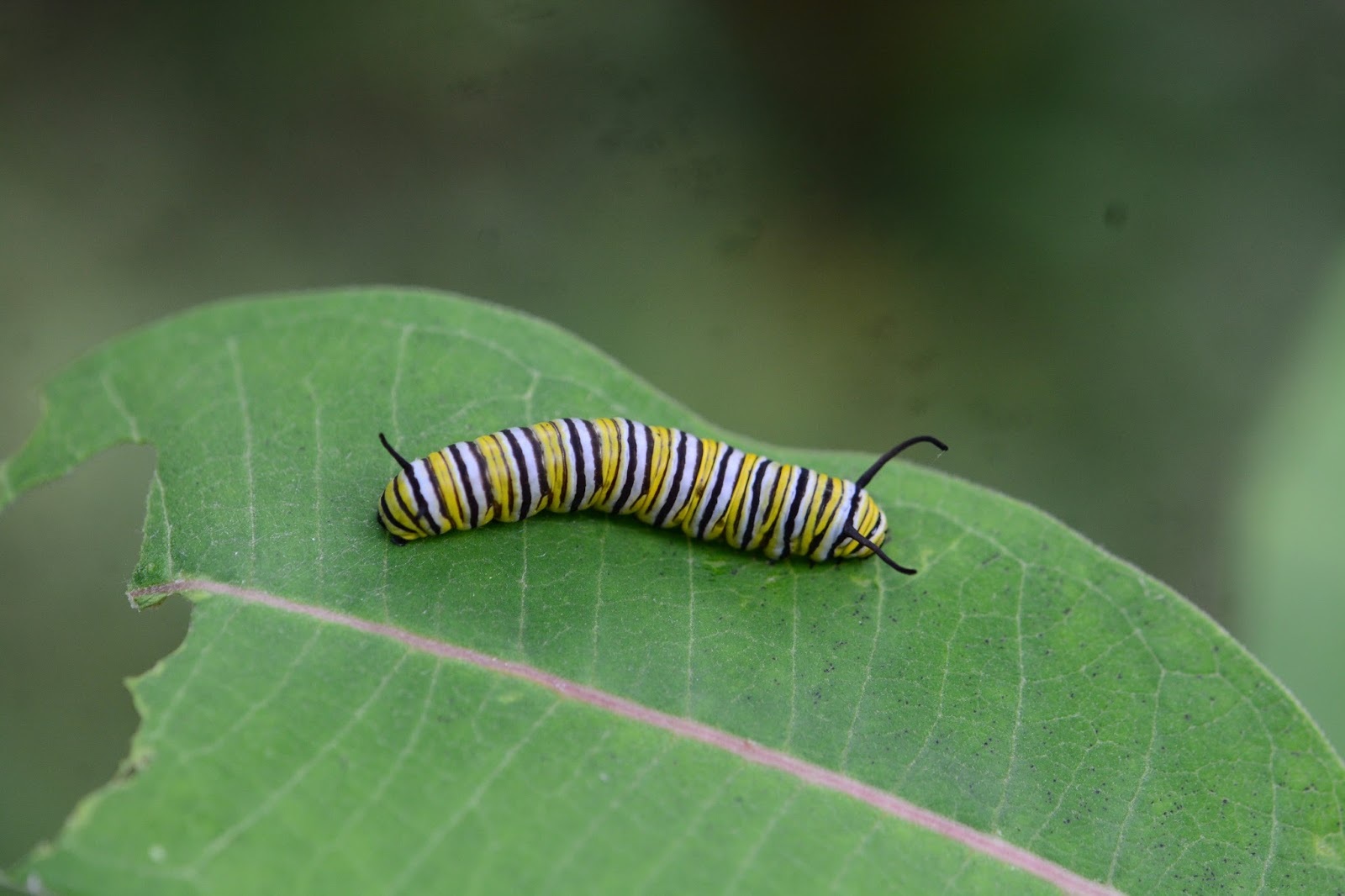
I can't identify all of the caterpillars I come across on hikes, this was an easy one though. On the left is a Monarch Caterpillar. On the right is a Monarch Chrysalis. Monarch Caterpillars are relatively easy to spot. They are always on Milkweed and their coloration giver them away on the green backdrop. The chrysalis is much harder to see. It blends in well with its surroundings and for me they are a rare find. 


Can you see it? I do know know what this caterpillar will develop into, as it is in it's larval stage here it sure is camouflaged. 


This was one of several parasitoid wasp species I found on this hike. I believe this is Trogus pennator. There are many parasitoid wasps and many without common names. It makes sense that I would find them while looking for caterpillars. Parasitoid wasps lay their eggs inside caterpillars. Their larvae eat away at that caterpillar from the inside out and will emerge and pupate on the caterpillar. Parasitoids kill their hosts and you may not like what they do, but they do serve a purpose. They help to keep populations of moth, butterflies and beetles at certain levels, this in tern limits the damage that will be done by the next generation of these insects when in larval form. Most of the larvae of the host species eat plant material and a lot eat live plant material. Even beneficial pollinator species can do damage to trees and other plants if not kept at just the right population size. You may think parasitoid wasps are gross, but they play an extremely important role in our environment.  


This is another common find on Milkweed at this time of year. It is a Milkweed Tussock Moth caterpillar. I found many on this trip. 


I can say this is a caterpillar and that is about it. No luck with finding a species for this. I do not have a caterpillar guide book and I don't think one currently exists. If anyone knows either the common or scientific name of this little critter please let me know. 


One cool looking spider. 


To me this was the greatest find of the day. I just thought this was the coolest wasp. I just learned after looking it up that this is also a parasitoid wasp. With it's body shape being dissimilar to the other parasitoids I did not think it was going to be. I believe this is Conura amoena. I am a little disapointed I did not get a better photo. 


More parasitoid wasps. There are so many different species of these it is just astonishing.


This was a new beetle find for me. It is a Milkweed Leaf Beetle and I found several on milkweed leafs.


Another amazing insect. This is a Walking Stick. Most people might think of the tropics when they think Walking Sticks, but we do have them in Eastern PA as well. They are often hard to spot and blend in well with their surroundings. 


Milkweed Bugs on a Milkweed seed pod. The one hanging upside down is in the process of molting. These bugs will molt a number of times before reaching maturity and becoming winged adults. 


Found many of these along the access road and trails I traversed. I am not sure of the species and have had no luck looking it up. 


This was all of the trash from the trip. Much of it was collected near the firetower itself. When I have more time into fall I will try to find out who owns the property with the dump site and get the area cleaned up and hopefully get the owners to secure it so it doesn't happen again. I hope you enjoyed the insect photos from this trip. I am sure there will be more to come this fall!

You too can help with taking out the trash! If you get out hiking take a grocery bag with you, give it a second use and fill it with trash while you are out! Every bit helps. You can also help contributing to this project here: Help Fund Taking Out the Trash

Like this project? Like it on Facebook: Taking Out the Trash in Eastern PA