Showing posts with label Two-Lined Salamander. Show all posts

Friday, May 5, 2017

Another Amphibian Night (7-Mar-2017)


With rain most of the day that continued into night, there was definitely going to be amphibians crossing the roads. I contacted Stephen Kloiber and Jon Mularczyk to see if they were going out to help cross amphibians. Both Stephen and Jon are bird enthusiasts, that at this time of year, hang up their binoculars to help amphibians get to their breeding pools safely. Both were going out and I arranged to meet them. Amphibians can be slow to cross roads and on nights when there are many crossing there can be high mortality rates. Often in areas where many amphibians cross you will find that there are volunteers that help move them across, lowering the mortality rates and helping to ensure we have these species around for years to come. For this and other reptile and amphibian posts, I am not giving a location as to where we were. It is illegal in the state to buy or sell native reptiles and amphibians, but just because there is a law doesn't mean that people don't do it. Not giving locations helps to protect these species from collection. Above is a female Spotted Salamander, one of the first finds of the night. At this time of year it is easy to distinguish male Spotteds from females. Males are slender with a large bulge at the base of the tail. Females are full of eggs and are quite large around the midsection. 


Spring Peepers are one of the smallest spring time amphibians. Only about the size of a nickel, they can be hard to spot in the road if they are not moving. Once they get to the breeding pools they create the loudest vocals, which at times can be deafening. Most of the time Spring Peepers can be identified by an X marking on their back. Not all individuals have this, but most do.


A male Spotted Salamander that made it to the yellow line on its own. If you come across amphibians crossing the road and want to help them along, first wet your hands, then move them in the direction they are heading and place them a couple feet off the road. The spring breeders like Spotted Salamanders, Wood Frogs and Spring Peepers know where their breeding pools are and will continue in that direction once moved. 


Spotted Salamanders are in the genus Ambytoma, the mole salamanders. They are called this because the majority of the year they are underground. Spring is really the only time they venture topside. Other mole salamanders in Eastern PA include the Jefferson and Marbled, the Marbled is a fall breeder and is not often seen other than the larval stage at this time of year.  


It is common to find salamanders crossing the road with this pose. I have no idea why they do it. 


A rarer sight crossing the roads are Jefferson Salamanders. Uncommon in the state this is a protected species. Generally Jeffersons breed earlier than Spotteds, but it really all depends on the conditions of the year. 


We only came across one Red-Spotted Newt on the roads. Generally they are a much more common sight. As juveniles Red-Spotted Newts are called Red Efts and are terrestrial. They spend over four years on land before returning to water and going through a metamorphosis into the adult stage. Both in color and structure the Red Efts differ from the adults. Above is a Red Eft. Adults are generally an olive color and the biggest physical difference the adults have is a large keeled tail.


Red-Spotted Newts are also trying to breed at this time of year. Either Steve or Jon spotted this adult Newt grabbing onto an unsuspecting Spotted Salamander that was passing by. It took some time, but the Spotted was able to break away from the Newts loving embrace.


In the ponds Spotted Salamanders congregate in certain areas. Males will deposit a spermataphore that will later be picked up by a female and used to fertilize her eggs. There is no contact necessary for this salamanders reproduction. 


Every once in awhile you will also find stream salamanders like this Two-lined crossing roads in rain events. They are not traveling to specific breeding sites, they are just crossing the road. 


Redback Salamanders can also be found crossing the roads on rainy nights. This species is fully terrestrial. Eggs are laid on land and when they hatch fully formed salamanders emerge. They have no aquatic life stage. 


A salamander that is often confused with a Redback is a Four-toed. Another protected species in PA, Four-toeds commonly cross roads during rain events. 

On this night I picked up at least one piece of trash at just about every stop we made to move salamanders across. Steve and Jon helped as well. Since we were just throwing it in the back of my car I didn't take a photo of everything at the end of the night. I hope you enjoy this post and watch out for amphibians while you are driving in the spring and summer! Thank you both, Steve and Jon, for your continued efforts in helping amphibians get to their breeding destinations!

See my most updated posts on Facebook: Taking Out the Trash in Eastern PA


Thursday, June 2, 2016

Tuscarora State Park (1-June-2016)


Trying to keep cool on another hot day I took a ride over to Tuscarora State Park and parked at a pull off and trail head above the lake. For the most part the trails here are shaded and stick close to the streams, a nice place to be on a hot day. 


An old glass jar, one of my first trash finds of the trip, came with a surprise. A Two-Lined Salamander! After snapping this photo I put the two line in the depression where the jar was and worked on cleaning the mud from the jar. 


Some portions of the trail were overgrown. Here Multiflora Rose was hanging over the trail in some places. As always when I'm near it, I got a couple thorns in me. Invasive species aren't cool. 


Looking down stream on the main branch of the Locust Creek. There are two streams in this section with the same name. The other is a small 1st order stream that flowing into this one.


For a couple items I had to get my feet wet. This plastic bag caught in a strainer was one of them. 


There wasn't much along the trails. These are a couple of the things I did find.


A juvenile American Toad. Most likely a hatchling from last year. 


A couple more things found along the stream. Normally I don't take broken glass but the bottle on the left was only missing its bottom. I am still surprised whenever I find round bottom 2-liter soda bottles like the one on the right. They generally don't look as though they have been in the environment for over 20 years and some look like they came off a shelf yesterday. This one being in the stream had a little wear, but not much after the mud was cleared off.


Looking down the channel where the Locust Creek meets Tuscarora Lake. From here I took a different route back to my car. Didn't find much trash on the way out.


For the amount of walking I did this really wasn't a lot of trash compared to other places. I'm happy about that and the other nice thing was that there was hardly any new trash items, almost everything had been there for awhile.


A juvenile Pickerel Frog. 


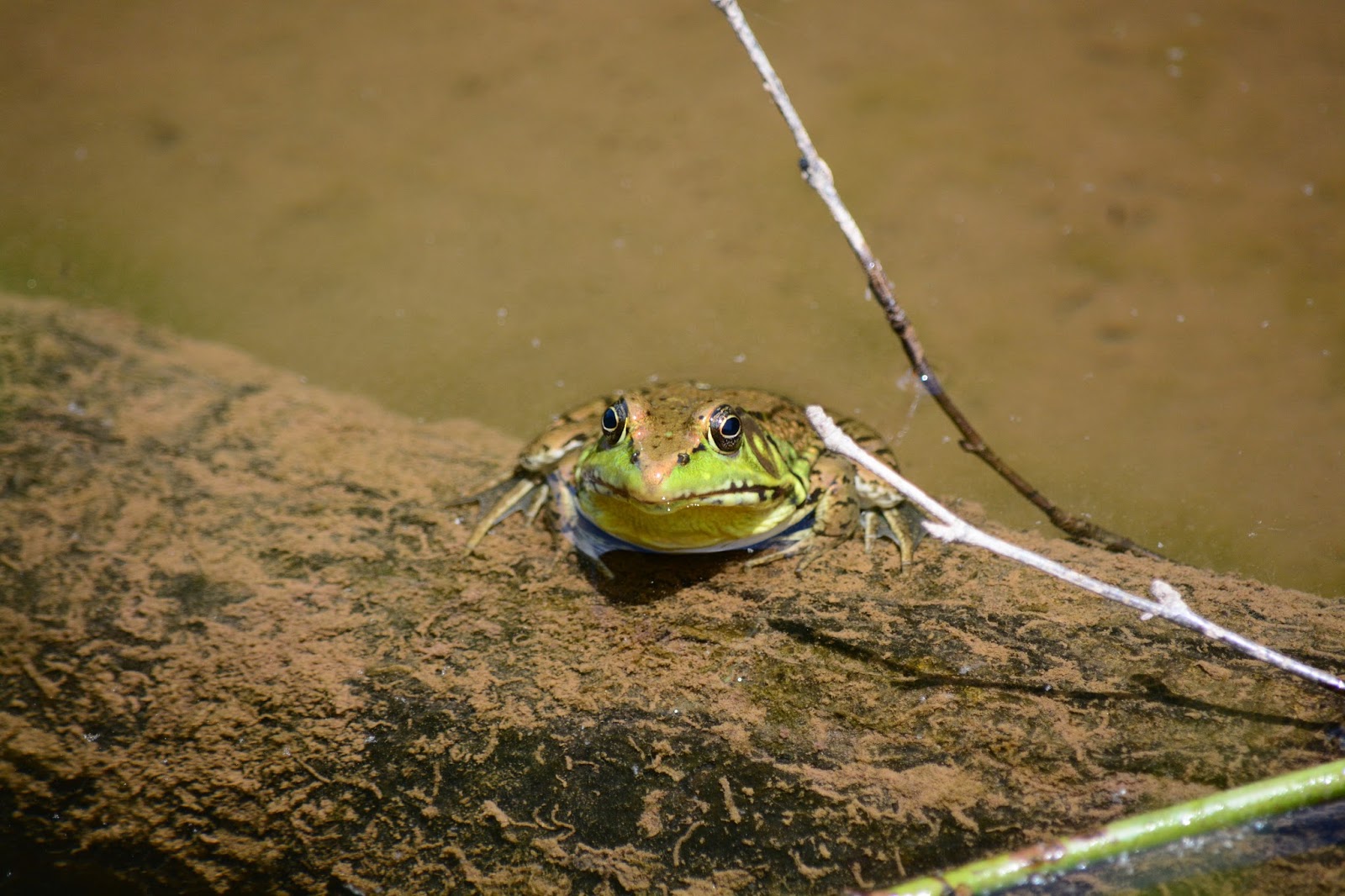
Green Frog on the left, American Bullfrog on the right.


This small school of Perch was swimming through the channel where Locust Creek meets the lake. Last week when I did the on the water clean-up here I did see a lot of Perch, just couldn't get a photo.
You too can help with taking out the trash! If you get out hiking take a grocery bag with you, give it a second use and fill it with trash while you are out! Every bit helps. You can also help contributing to this project here: Help Fund Taking Out the Trash

Like this project? Like it on Facebook: Taking Out the Trash in Eastern PA

Friday, April 15, 2016

Multiple Locations (14-Apr-2016)


Like other similar posts I am not giving out the specific locations for the sites that I visited in this post. My friend Kelly and I went out once again searching for sites that would work for her upcoming salamander study. We visited multiple streams on this trip and we really didn't have much luck finding the exact conditions her study needs. 


I have posted several photos of this species before. This is a Northern Dusky Salamander and will be one of the species included in Kelly's study. The streams we searched had Dusky Salamanders, just not in a high abundance. 


This is a Two-Lined Salamander. They too were in every stream we visited and in higher numbers. All of the sites though needed other variables to make them suitable. 


I grabbed what I could as we hiked along the streams or trails on the way to them. Everywhere seems to have trash and it wasn't hard finding items at every visited site.


At the location this trash was taken out of the main problem with the stream was there was too much human activity. The stream was disturbed, with rocks flipped/moved not long ago. In this case it looked like it was kids. There was even a fort built over the stream in one area. I like the fact that kids in that area are spending time outside, but I wish they had guidance to lessen the impact on the stream. 


In all I did not take a whole lot of trash out on this trip, but did get streams checked off Kelly's list. This also gave me an idea of areas that have a good amount of trash and I will be back to some of these areas for more thorough clean-ups.


At one location Trout Lilies were popping up all over the forest floor. Hopefully this is a sign that snow is definitely over for the spring. 

You too can help with taking out the trash! If you get out hiking take a grocery bag with you, give it a second use and fill it with trash while you are out! Every bit helps. You can also help contributing to this project here: Help Fund Taking Out the Trash

Like this blog? Like it on Facebook: Taking Out the Trash in Eastern PA

Friday, April 1, 2016

State Gamelands (1-Apr-2016)


Today was another day of stream study site searching. I think Kelly has close to enough options to choose form for her study now. Out of several stops on this trip only one site was suitable. Above is a Two-Lined Salamander on the left and two Northern Dusky Salamanders on the right. This is how they were positioned under a rock. I would like to point out that there is a proper procedure for what to do when a salamander is found under a rock or log. The first thing to do is to wet your free hand, the other may be holding the cover object. With your now wet hand encourage the salamander to move from the area the rock covered. If the salamander does not move on its own then it can be picked up and moved. It is best to keep the in hand time as short as possible. Once all salamanders are removed from under the cover object, place the cover object back right where it was. The salamanders will find their way back under and with them moved there is no chance of crushing them. It can take a long time for suitable habitat to form underneath a rock or log. If you go through a stream or forested area flipping objects and not putting them back you are destroying the habitat for salamanders and the smaller critters they feed on. Respect the wildlife and respect their homes. 


A juvenile Spring Salamander. As I stated yesterday these are not that common of a salamander to find.


This is another type of Caddisfly Larvae case. This one is made out of pebbles and specifically flat sided pebbles. It is very unique and a very impressive home. 


The other days searching for sites we hadn't run into many frogs. On this one we found many Pickerel Frogs like the one above and one Green Frog. 


A very old bottle. It is labeled Joe Lieberman Allentown PA. After doing some searching I think it is a beer bottle and is possibly from the very end of the 18th century. I could not find any other bottles exactly like it through online searches so this may be rare. 


An American Toad that was hopping through a forested area. The frogs and this toad were not what we were looking for, but it is always nice to see any species of amphibian. 


From the first location. Not that much trash, but really there shouldn't have been any where we were. Well there should never be any trash, but there always is. 


From the second location. The flask on the left standing upright was another old one. It was labeled Warranted Flask. Not sure what it is warranted for. 


From the last location. No old bottles in this pile, but there was a glass. 


Today we also came across the first turtle I have seen on a road this year. Here Kelly is holding it proudly. It was a male Painted Turtle and we gave him a little help. If you ever find a turtle on the road the best thing to do is to move it off of the road and take it about thirty feet off of the side. Always take them in the direction they are heading. It is never good to take a turtle home as a pet and you are not saving it when you drive off with it. Several species that commonly cross roads in PA are protected species and taking them home is unlawful. It really is best just to help them across and let them go on their way. 

Tomorrow I will be back to my regular trash collecting. I may get out on the water to get to some locations that haven't been easy on foot. 

You too can help with taking out the trash! If you get out hiking take a grocery bag with you, give it a second use and fill it with trash while you are out! Every bit helps. You can also help contributing to this project here: Help Fund Taking Out the Trash

Like this blog? Like it on Facebook: Taking Out the Trash in Eastern PA

State Gamelands (31-Mar-2016)


I helped out again looking for sites for my friends graduate project. I don't mind sharing the photos of the critters that we came across, but to protect them and the streams in which they live I can not give out the locations of where we were. This is just the very start of Kelly's project and our goal is to locate streams which contain a variety of stream salamander species. Once she has decided on what streams to use the next step is to complete and submit her permit forms to the Fish and Boat Commission and possibly the DCNR. Yes, you do need special permits to conduct a study on amphibians in our state. We checked out three sites on this trip and as we were hiking in and out of the locations I was picking up trash as well. That you can find near the end of the post. The Salamander above is a Dusky Salamander. Two species of Dusky can be found in Eastern PA. 


I have shown Stoneflies before in this blog. This particular one is a Giant Stonefly. A good water quality indicator and an awesome insect. 


Two-Lined Salamander. Very common in not only streams, rivers as well. Many of these stream species you would rarely see on a riverbank. 


Spring Salamander. Always good to find a Spring Salamander. They are not as commonly seen as the Dusky or Two-Lined.


What is this? You might be asking yourself that. It is a Cranefly Larvae. It looks nothing like the adult cranefly and it is the only thing in a stream that I still find creepy. I do know people that won't even touch them though, so at least I am not bothered by that.  


Catching salamanders by hand is a delicate and sometimes frustrating endeavor. Here Kelly is carefully picking up a dusky salamander from the bottom of this clear stream. 


This downed tree presented a photo op that just had to be taken. 


From the first location of the day. I had cleaned this location last year and since then there looked to have been several parties at this spot. I will be going back to this area soon to do a more thorough clean-up.


The second location was much more remote. This was the only item that was near the stream. Did find more on the way in and out. 


Less than the first site and some of the bottles had been there for awhile. 


This was just from a short stop on the way home. I was surprised by the old 7-Up bottle. It was the first large one I have found. 


This was from Wednesday. After the memorial service I did find some time to make it out for a short trash collecting walk. This was taken off of the Macoby Creek in Montgomery Co. 

You too can help with taking out the trash! If you get out hiking take a grocery bag with you, give it a second use and fill it with trash while you are out! Every bit helps. You can also help contributing to this project here: Help Fund Taking Out the Trash

Like this blog? Like it on Facebook: Taking Out the Trash in Eastern PA